A Veterinary Behaviourist Told Me to Put My Dog to Sleep
By Nando Brown
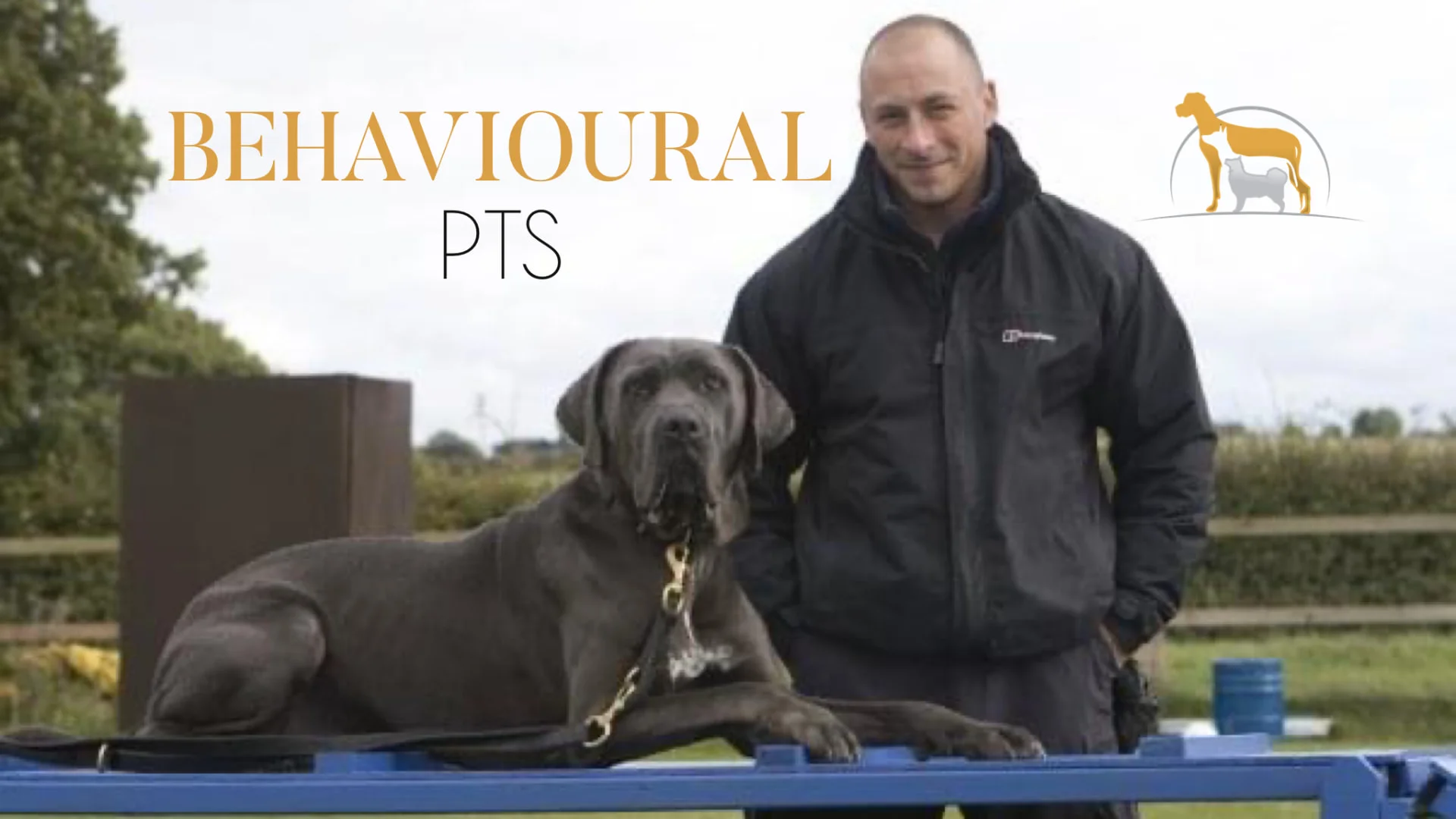
Over twenty years ago, a veterinary behaviourist recommended that I have my Cane Corso, Balou, put to sleep.
Listen to this article · read by Nando Brown
Over twenty years ago, a veterinary behaviourist recommended that I have my Cane Corso, Balou, put to sleep.
I can tell you now, with more than twenty years of experience working professionally with dogs, that recommendation was wrong.
Balou had serious behavioural problems. He could be extremely difficult around people and other dogs, and by the time I ended up sitting in front of a veterinary behaviourist I had already been through several trainers, spent a substantial amount of money trying to get help and was desperate for somebody who knew what to do.
But Balou went on to live several more happy and fulfilled years. He had people he trusted, dogs he played with, walks he loved and training he genuinely enjoyed. He was never an easy dog, but he had a life worth living.
That is why I am comfortable saying the recommendation was wrong.
The more interesting question is how I ended up there in the first place, because the veterinary behaviourist was not the first professional Balou and I had seen, and he certainly was not the only one who got important parts of that dog wrong.
I Picked the Frightened Puppy
Balou’s problems did not begin with the veterinary behaviourist. Looking back, there were signs from the day I met him that I simply did not know how to read.
A friend of mine had got me interested in Cane Corsos. He was into Bullmastiffs and showed me these enormous Italian mastiffs, and my reaction was basically, “These dogs are fucking beautiful.” I did what I thought was research as well. I bought a breed book and read about them being aloof with strangers, protective and very much a one man dog.
At the time, all of that sounded fucking perfect. I wanted a dog that would be my best mate. What I had not yet realised was that breed books are often written through rose tinted glasses by people who absolutely adore the breed they are writing about. “Aloof with strangers” can sound wonderfully dignified when what you may actually be dealing with is a dog that is fucking wary of strangers. “Protective” can sound reassuring until you are the person trying to manage what that looks like in the real world.
Then I found a breeder, and with everything I know now, I went to the wrong one.
When I arrived, Balou’s mum was trying to smash her way through a conservatory door to get at me while her puppies were in the front room. I was told this was normal because she was protecting her pups, and I accepted that explanation because I did not know any better.
Then I chose Balou. Partly because he was blue and, to me, the prettiest puppy there. But there was another reason. While the other puppies were doing their thing, he was tucked away behind the sofa keeping himself out of the way, and I thought that was a good sign.
I remember thinking that if I was going to own a very large, powerful dog, having the quiet one that preferred to stay out of everybody’s business sounded pretty fucking sensible. What I did not understand was that I was probably looking at a frightened puppy. Today, that behaviour would immediately make me start asking questions. Back then, I interpreted fear as calmness.
I took him home and largely raised him in the same way I had raised my first dog, a Staffordshire Bull Terrier. She loved people, loved dogs and had never given me any major behavioural problems, so I had no reason at that point to think the same basic approach would produce a completely different outcome.
But Balou was a completely different dog. As he got older he started attempting to bite people and pinning dogs down. Suddenly I had this extremely powerful young Cane Corso displaying behaviour I had absolutely no idea how to deal with.
There was another complication too. I was young, had a shaved head, tattoos and considerably more muscle than I have now. Standing next to a Cane Corso with serious behavioural problems, I looked exactly like the stereotype people expected. I think some people saw me and assumed I had deliberately gone out and bought a status dog or wanted something aggressive for protection.
I didn’t. I wanted a best mate, which is exactly why all that stuff in the breed book about being a one man dog had appealed to me in the first place.
And when things started going wrong, I did what owners are constantly told they should do. I went looking for professional help.
The First Trainers Did Not Know What to Do With Him
I went through three or four different trainers trying to get help with Balou. Some were more reward based, some were more balanced, but that was not part of my decision making at all. I was choosing trainers because they were nearby.
I did not know enough about dog training to have an ethical position on any of it. I did not know there were different camps, different methodologies or entire arguments about how dogs should be trained. I did not even really think of dog training as a profession in the way I would now. It was just this thing people did, and if somebody nearby taught dog training classes, I assumed they probably knew what they were doing.
A lot of those early classes took place in church halls, and one of the things I remember most clearly is being told to stand in the corner with him because he was losing his mind while everybody else carried on doing circles in the middle of the room.
That was basically the intervention.
Stand over there with the difficult dog while the rest of us continue the class.
There was very little meaningful guidance about what I should actually be doing with him. Nobody was showing me how to manage his distance from other dogs, how to recognise when he was getting close to threshold, how to build engagement, how to move him away safely or how to give him something else useful to do. I was just the bloke in the corner with the dog nobody really knew what to do with.
Eventually I was told that neutering him would solve the aggression.
Again, I accepted that because I was being told it by people I thought knew more than I did.
Before we got to that point, though, I tried something else. I found a professional residential training company in Wales and paid around £700 for five days of training.
At the time, £700 was not going to financially cripple me. I was fortunate enough to have a few quid around me. But it was still enough money to make me think, this is a proper investment.
And if that investment could transform Balou’s life and make living with him safer and easier, then it felt completely worth making.
I thought I had finally found the experts.
£700 of Training That Didn’t Solve the Problem
When I dropped Balou off at the residential centre in Wales, I remember feeling nervous but also massively relieved. Everybody looked professional. They were kitted out properly, they had kennels, training fields, systems, and they spoke with confidence. I remember thinking, this is it. I have finally handed him over to people who know what they are doing.
All the dogs were being trained on choke chains. I did not question that at the time because I had no reason to. These were the professionals and I was the inexperienced owner asking for help. If they told me this was how the dog needed to be trained, I assumed they knew better than I did.
They struggled to get near Balou initially because he really was a handful. A choke chain was put on him before I left, and then I went away for the week hoping that five days of intensive work might finally start changing things.
When I came back, I was genuinely impressed.
They took me out for a demonstration and Balou suddenly had heelwork. He could stay. He had a recall. He was doing agility style exercises and jumping over barrels. At the time, it looked incredible. This dog who had seemed so difficult suddenly looked trained.
Then another dog appeared a couple of fields away with another trainer.
Balou completely lost his mind.
Nothing about the behaviour I had actually sent him there for had meaningfully changed.
That was the moment the shine came off everything I had just watched. The heelwork looked good. The stays looked good. Jumping over barrels looked good. But I had not paid £700 because I desperately wanted Balou to jump over a barrel. I had paid because his behaviour around other dogs was making our lives difficult and potentially dangerous.
That does not mean I think residential training is a bad idea. I actually think there can be enormous value in a dog spending a sustained period working with a competent professional. A trainer who gets several days of consistent practice can often build skills much faster than an owner attending one class a week and trying to recreate everything at home.
But residential training is only as good as the people delivering it, the methods they use, the goals they are actually working towards and what happens when the dog goes back to the owner.
Balou had learned a collection of behaviours.
The problem I had asked them to help me with was still sitting there.
Then He Bit the Vet
One of the pieces of advice I had been given was that neutering Balou would help with his aggression.
At the time, I accepted that fairly readily. Again, I was not in a position to properly challenge it. I had a difficult dog, I wanted help, and professionals were telling me what they thought I should do.
The day he went in to be neutered, I remember thinking he seemed particularly uncomfortable. He was hiding behind me in the consultation room, and I told the vet he seemed off.
She knew Balou. She knew he could be difficult.
He had his front paws on the scales and was watching her carefully. Rather than giving him time or changing the setup, she came over, picked up his back legs and moved them onto the scales.
The second his back feet landed, he turned around and bit her in the throat.
Thankfully, he did not bite with enough force to cause a serious injury, but there was blood coming from her neck. It was obviously a horrible situation.
Once everything had settled down, she came back in and told me I had two options.
I could have Balou put to sleep, or I could see a veterinary behaviourist.
I remember thinking, what the hell is a veterinary behaviourist?
But if there was somebody with more expertise who might be able to help him, then of course I wanted to see them. I was not looking for an excuse to get rid of the dog. I was looking for somebody who could help me understand him and give me something practical to work with.
So I took the referral.
And that was how I ended up in an office in Wimbledon with the man I understood to be the Royal Veterinary College medical expert on vicious animals.
The Veterinary Behaviourist Was Wrong
By this point I had already been through local trainers, a residential training centre and the vet. So when I was referred to somebody I understood to be the Royal Veterinary College medical expert on vicious animals, I thought I had finally reached the person at the top of the ladder.
I spent a substantial amount of money sitting in an office in Wimbledon for several hours while he assessed Balou. One of the things I remember very clearly is that he seemed genuinely frightened of him.
I left with medication and what I now recognise as a classical counterconditioning protocol. I was also given a clicker as part of that process.
There is nothing inherently wrong with any of those things. Medication can be enormously useful in behaviour cases, counterconditioning can be an important part of behaviour modification, and clicker training can be incredibly useful. But the way I was introduced to all of it was nowhere near enough for the dog standing in front of us.
I was shown one exercise for about fifteen minutes and then largely left to get on with it.
There was no broader practical training programme. No meaningful work on management. No muzzle training. No discussion about useful obedience or handling skills that might make everyday life safer. No real exploration of enrichment or what Balou actually enjoyed doing. No proper plan for what I should do when things went wrong.
As far as I can remember, pain was not meaningfully explored either. I cannot say with absolute certainty that it was never mentioned because this was more than twenty years ago, but there was definitely no pain trial or attempt to use medication diagnostically to see whether pain might have been contributing to the behaviour.
I want to be careful with that point because Balou was only found to be in significant pain much later in his life, and I cannot retrospectively claim that pain caused the behavioural problems he had when he was younger. But he was very poorly bred, had already needed surgery for cherry eye in both eyes, and looking back now, pain or other medical contributors are something I would absolutely want investigated.
The bigger problem for me at the time, though, was support.
I left that consultation still owning exactly the same extremely difficult Cane Corso, except now I had medication, a clicker and a protocol I barely understood how to apply, with nobody there helping me work through what happened when real life did not look like the consultation room.
That poor introduction to reward based training mattered more than I realised at the time.
When I later encountered balanced trainers who appeared able to produce immediate, practical control over difficult dogs, the contrast was enormous. In my head, one side had given me a little plastic box that made a noise and an exercise that was not solving my problem. The other side seemed to be saying, “Here is how you actually control this dog.”
And Balou was a Cane Corso. These are dogs whose ancestors were used for some fairly serious jobs. At the time it was very easy for me to think, what the hell is this little clicking box supposed to do with a dog like this?
That was not a fair assessment of reward based training. It was an assessment based on a poor introduction to it.
But I did not know that then.
I just knew I was still struggling, so I started trying to get hold of the veterinary behaviourist.
I emailed. I phoned. I rang the office. I spent weeks trying to get some guidance because what I had been given was not enough.
Eventually he got back to me and offered to come to my house for a free consultation.
I took it immediately.
He came round, spent about an hour with us, and we did not do a single practical training exercise.
At the end of that consultation, he recommended that Balou be put to sleep.
I refused.
And I can say now, with more than twenty years of professional experience working with dogs, that he was wrong.
I am not saying behavioural euthanasia is never appropriate. Sometimes it absolutely is. There are dogs whose quality of life is terrible, whose risk cannot be managed safely, or whose circumstances make euthanasia the most responsible decision available.
Balou was not one of those dogs.
There were too many things that had not been explored, too many practical skills I had not been taught and too many ways of helping both of us that had never even been attempted.
After that consultation, Balou went on to live several more years of what I consider a happy and fulfilled life.
But to get there, I went looking for another expert.
Then I Called the Trainer From the Telly
After the veterinary behaviourist told me to put Balou to sleep, I did what I had been doing all along and went looking for somebody else who might know more than I did. This time I contacted a trainer I had seen on television. In my head, being on television carried a certain amount of authority. I assumed somebody would not be there unless they were good at what they did.
She arrived at my house carrying a stuffed Kong, which I remember because it was probably the first time I had seen anybody use enrichment professionally with a dog. As she came through the door she dropped it, bent down to pick it up, and Balou drove his nose straight into her face. She stood up and backhanded him.
My immediate reaction was, what the hell do you think you are doing? Then I watched Balou back away from her, and instead of questioning her, I started questioning myself. Nobody else had got that sort of immediate response from him. Perhaps I had been too soft. Perhaps she understood something about this dog that I did not.
That idea landed particularly hard because of the relationship I had with my dogs at the time. I was a young single bloke and they were a massive part of my life. They slept on the bed, sat on the sofa and came with me whenever they could. I spent a fortune on food, toys and whatever else I thought they would enjoy. I absolutely adored them. They were my mates.
Then I was told that Balou believed he was in charge, that he was effectively the alpha in our relationship, and that some of the things I had been doing because I loved him were contributing to the problem. Suddenly all that generosity was being reframed as weakness.
I remember feeling almost betrayed by him. I had given this dog everything, looked after him, taken him everywhere and treated him like my best mate, and now I was being told he was taking advantage of me. Looking back, I can see how ridiculous that interpretation was, but at the time it made emotional sense. It gave me an explanation for why things had gone wrong.
I was given what was essentially a dominance rank reduction programme, with rules around food, attention, access to furniture, movement and who controlled what. Compared with what I had experienced before, it felt practical. The veterinary behaviourist had given me medication, a clicker and an exercise that did not feel remotely big enough for the dog I was living with. This trainer gave me a theory that appeared to explain Balou and a list of things I could actually do.
So I bought into it, and I started getting harder with him.
It was not because I wanted to dominate my dog or enjoyed putting pressure on him. I genuinely thought I had discovered where I had been going wrong. I had spent all this time being told, in one form or another, that other people understood my dog better than I did, and now I was being told that being firmer was part of being a responsible owner.
As I became more involved in balanced training, that change in me continued. I became harder in the way I handled Balou because I thought harder was what he needed. Looking back now, I am as interested in what that training philosophy did to the person holding the lead as I am in any individual technique it taught me.
The Balanced Trainers Taught Me Useful Things Too
For all the problems I now have with some of what I was taught during that period, it would be dishonest to pretend I learned nothing useful from balanced trainers.
I started assisting classes, then teaching some of my own, and later moved into another training business. For the first time I was spending a lot of time around people who trained dogs regularly, handled difficult dogs and expected them to learn useful skills.
Some of what I learned genuinely helped Balou.
Obedience was a big part of that. He enjoyed training, and it gave us something productive to do together. It gave him structure, gave us one to one time and gave me practical ways of keeping him safe when the environment became difficult.
If another dog appeared, I had a recall. I could ask him to lie down. I could keep him engaged with me instead of simply standing there waiting for everything to go wrong. None of that cured the underlying problem, but it made our lives considerably easier and gave me a level of practical control that I had not had before.
I think obedience sometimes gets treated as though it is somehow beneath behaviour work, or irrelevant to it. I do not agree with that. Teaching a dog useful skills can be an important part of welfare and an important part of helping an owner live safely with a difficult dog.
The problem was not that I was teaching Balou things.
The problem was that I became convinced those things needed to be taught in increasingly hard ways.
As I spent more time in that world, I started to notice that a lot of the behaviour systems followed a similar pattern. Establish control, condition consequences, suppress the behaviour you did not want, then reinforce the behaviour you did want. There were differences between trainers, but the overall logic became very familiar.
At the time, that felt far more complete than what I had previously been given. It gave me practical tools, clear criteria and visible results.
And because some of it genuinely helped, it became very easy to assume the rest of it must be right too.
Then I Started Getting Harder
The deeper I got into balanced training, the more normal corrections became. It was not simply a case of learning to use a choke chain. I was taught about prong collars and e collars, initially through fairly straightforward positive punishment applications, but also throw discs, rattle bottles, water spray bottles and compressed air. I was taught how to set up booby traps for problems such as counter surfing, how to deliver corrections, and how the intensity of the correction should change depending on what the dog had done.
There were different levels of correction. At the harder end, one expression that was used was, “Take his fucking head off.”
And I did what I was being taught.
Sometimes the corrections I gave Balou were hard enough to make him yelp. The first time you hear your dog yelp because of something you have deliberately done, it affects you. But when the people teaching you tell you that this is what the dog needs, that some dogs require a firm hand and that the correction has to be meaningful if you want it to work, you start to normalise it.
I think that happened to me gradually. Every time Balou yelped and the world carried on, it became slightly easier to accept the next one. I did not suddenly decide that hurting my dog was fine. It became part of training because the people I trusted had taught me that sometimes this was simply what effective training looked like.
I was also attracted to the results. I could see how quickly some of these tools could produce very clean behaviour, particularly things such as heelwork. I remember seeing prong collars and e collars and thinking, I want to learn how to do that. In fairness, there were occasions when I was told I was not ready to use certain tools yet, but that almost made them feel like something you graduated towards as your training became more advanced.
By this point I was already well into that world when we were taught an emergency stop exercise that has stayed with me ever since.
The exercise was built around a recall. Balou would be coming back towards me on a long line. At a predetermined point I was supposed to shout “stop”. The obvious problem was that he had never been taught what “stop” meant, so he carried on moving and hit the end of the line, which had been tied off to a fence. Some of the dogs were wearing flat collars. Balou was wearing a choke chain. None of them were wearing harnesses.
When Balou hit that line, he yelped.
I had already heard him yelp from corrections by then, but this one went through me. I can still remember the sound. I knew immediately that I had really hurt him, and I felt guilty almost as soon as it happened.
Afterwards he did not want to recall properly for weeks.
With what I know now, that hardly surprises me. I had taken a behaviour that required him to run enthusiastically towards me and arranged for that behaviour to end with a painful experience. Whatever the intention behind the exercise, that was part of what Balou actually experienced.
It was one of the moments when something started to feel wrong. I was already deeply involved in balanced training by then, so it was not an instant revelation where I threw away everything I had learned and crossed over to another philosophy. But the sound of that yelp stayed with me, and so did the effect it had on his recall.
Looking back, I think the more important change had been happening gradually long before that exercise. I had become increasingly comfortable doing things to Balou that an earlier version of me would have found difficult to justify, because I had learned to see his pain as an acceptable part of teaching him.
The emergency stop was one of the first times that normalisation cracked.
Balou Was Never the Hopeless Dog I Had Been Told He Was
For all his problems, Balou was not some permanently dangerous dog who could never have a decent life.
He went on to have people he trusted and was comfortable around. I could introduce him to new people too, as long as I did not rush it. If I gave him time and managed the introduction properly, he could usually accept somebody within one or two sessions.
He also had dogs he genuinely liked. He played with my Staffy, my Pitbull and my Doberman, and he was good with a couple of Labradoodles belonging to my partner at the time. He had an inner circle, basically. The fact that he had problems with unfamiliar dogs did not mean he was incapable of having normal social relationships with dogs he knew and trusted.
He loved his walks and he loved going to training classes. Training became one of the most useful things we did together.
Not because obedience somehow cured the underlying behaviour problem. It did not. But it gave us structure, gave him something he enjoyed doing and gave me practical control when the world became difficult.
If something appeared that I knew he might struggle with, I could recall him, ask him to lie down, get him engaged with me and keep him switched on instead of just waiting for him to react. Those skills made him safer and made my life with him easier.
That is one of the reasons I am reluctant when people dismiss obedience as irrelevant to behaviour work. Sometimes the thing you are teaching is not directly changing the emotional response underneath the behaviour, but it still gives the dog and owner a much better way of navigating the situation.
A lot of those useful skills came from balanced trainers, and I think it is important to say that plainly.
The mistake was not teaching Balou obedience.
The mistake was believing I needed to hurt him to teach it.
Balou still had issues. Some days were better than others. He still needed thought, management and sensible introductions. But he had friends, he had people he trusted, he had things he enjoyed doing and he had a life that was considerably richer than the one I had been told he should not be allowed to have.
Then I Lost Him
Balou was just shy of six when I took him to the vet with an ear infection.
By that point he was still reactive to unfamiliar people, so they gave us our own little waiting room and planned to put him under anaesthetic before doing anything with him. I was told not to fuss him or talk to him because he was going in for a procedure, so I sat there and ignored him.
I thought I was doing the right thing.
I thought I was going to pick him up later that day.
About an hour after I left, the vet called me and told me they had found a considerable number of medical problems. Balou was in enormous pain, and the kindest thing to do was to put him to sleep.
I do not remember all the diagnoses from that day. It was too traumatic, and I have never wanted to pretend I remember details that I do not. What I do remember is being told how much pain he was in.
Looking back, there had also been a significant deterioration in his behaviour towards the end of his life. With what I know now, that would make me pay much closer attention to the possibility of pain or other medical problems. I cannot say the pain they found at the end explains the behaviour problems he had years earlier, because I simply do not know that. But I also would not dismiss pain now in a dog with that sort of history.
What I would do differently is make sure it was properly investigated.
The part that has stayed with me most, though, is that I had not said goodbye to him.
I had sat in that waiting room and deliberately ignored him because I thought I was following instructions. I thought I would see him again in a few hours.
Instead, I went back and found him on the operating table.
I knelt down beside him before they put him to sleep and told him that he meant the world to me.
And I told him I would never treat another dog like that.
That promise has probably shaped more of the trainer I became than anything else in this story.
Then I Found Another Way of Looking at Training
Losing Balou changed the way I looked at dogs.
By that point I had already started questioning some of what I had been taught in balanced training. The emergency stop had stayed with me, I was becoming increasingly dissatisfied with the depth of the education I was getting, and I had started to realise that producing control was not the same thing as understanding the dog in front of me.
Around that same period, although I cannot now remember whether it was shortly before or shortly after Balou died, I attended a Sarah Whitehead clicker training course.
It blew my mind.
Not because somebody suddenly convinced me that every balanced trainer was wrong or that every correction was evil. It was because I felt like I was learning more. There was more depth, more thought about how behaviour was being built, and more attention to what the dog was actually learning rather than simply whether the final behaviour looked right.
That mattered because my first introduction to reward based training had been so poor. I had previously been given a clicker, one counterconditioning exercise and very little practical support, so when balanced trainers later offered me something that appeared much more powerful and useful, I had concluded that the reward based approach simply was not enough for dogs like Balou.
The Sarah Whitehead course showed me that what I had been introduced to previously was not the limit of reward based training. There was considerably more to learn.
Balou’s death was part of that shift too. I had spent years becoming progressively harder with him because I believed that was what responsible training required, and then I lost him having promised that I would never treat another dog like that.
I cannot separate those influences neatly now, and I do not think there was one single moment when I suddenly crossed from one camp to another.
It was more a case of gradually realising that there were other ways of looking at dogs, other ways of teaching them, and a great deal that I still did not know.
What I Would Tell the Younger Version of Me
If I could walk back into one of those early church halls and speak to the younger version of me standing in the corner with Balou, I would tell him not to look for one person with one answer.
I would tell him to get Balou properly checked for pain and other medical problems. Not because I can now say pain caused his original behaviour problems, because I cannot, but because with a poorly bred dog showing serious behavioural issues it should have been something we actively considered.
I would tell him there was nothing wrong with teaching Balou obedience either. In fact, it helped enormously. Recall, down, engagement, structure and practical control all made his life safer and gave us something useful to do together. The mistake was not training him. The mistake was eventually accepting pain and increasingly harsh corrections as a necessary part of doing it.
I would want somebody to teach me how to recognise thresholds and use distance properly. I would want desensitisation and counterconditioning where they made sense, practical management, enrichment, good reinforcement, useful obedience and a proper plan for what to do when things went wrong.
And I would want somebody to actually support me while I learned how to do all of that.
That is probably one of the reasons we eventually built the Behaviour Bible through different lenses. Operant conditioning has its place. Classical conditioning has its place. Counterconditioning and desensitisation have their place. So do thresholds, distance, management, obedience, medical investigation and owner coaching.
Balou did not need one clever technique.
He needed all of us to stop treating our own piece of the puzzle as though it was the whole picture.
There Is No Professional Hierarchy of Competence
One of the things Balou taught me, and that I have seen repeatedly since, is that the dog training world has a habit of treating professional titles as though they sit on a ladder.
Trainer at the bottom. Behaviourist above that. Veterinary behaviourist at the top.
I do not think competence works like that.
Those titles can tell you something useful. A veterinary behaviourist brings medical expertise and prescribing authority that a trainer does not have. A behaviourist may have much deeper formal education in behaviour than a trainer. A trainer may have vastly more practical experience handling dogs, teaching skills and coaching owners.
But none of those things automatically tells you who is better.
A dog trainer who has taken dogs to an elite level of sport may know very little about serious behaviour problems, but that does not make them less skilled. They may have spent years developing exceptional timing, handling, reinforcement delivery, training mechanics and practical judgement. Those are real competencies, built through enormous amounts of practice.
Equally, somebody can have advanced academic qualifications in behaviour and still be relatively inexperienced when it comes to physically applying those techniques or teaching an owner what to do when everything starts going wrong in the real world.
I have met trainers with an excellent understanding of behaviour and behaviourists whose practical training mechanics were poor. I have met behaviourists who are brilliant trainers as well, and I am sure there are veterinary behaviourists who are excellent across all of those areas.
The title does not settle it.
Part of my concern is that some of the systems we use to describe professional progression reinforce this idea of a hierarchy. Different levels get assigned to different types of work, and the implication can become that moving upwards automatically means becoming more competent.
But competent at what?
One thing I have noticed in parts of dog training education is that the further somebody progresses academically, the more theoretical the education can become and the less practical training there sometimes is. That is not automatically a problem. Theory matters enormously. But practical competence does not magically appear because somebody has studied more theory.
And I do wonder whether some of these hierarchies reflect the backgrounds of the people designing them. I would not claim that is deliberate without evidence, but if the people defining the highest levels of professional competence are primarily academics, there is an obvious risk that academic knowledge becomes weighted more heavily than practical skill simply because that is the expertise they understand best.
The reverse would be just as flawed. If elite sport trainers designed the entire hierarchy, we might end up massively overvaluing training mechanics and underestimating medicine, emotional health, owner coaching or behavioural science.
What matters is what that individual actually knows, what they can actually do, what experience they have with the particular problem sitting in front of them, and whether they recognise the edges of their own competence.
Veterinary behavioural medicine is a specialist discipline, but expertise in medicine does not automatically make somebody the best person to teach an owner how to handle a reactive dog on a walk. In exactly the same way, being exceptional at practical dog training does not qualify somebody to start making prescribing decisions.
These are different skills, and they do not arrange themselves neatly into a hierarchy.
Balou did not need somebody higher up a ladder.
He needed the right people, with the right skills, actually working together.
Education Has to Teach More Than One Side of the Subject
I recently spoke to somebody who had studied this subject at university and regarded that as the highest level of education available to them. What struck me was that, despite the time and money involved, they had been given virtually no opportunity to develop practical dog training skills.
If we are preparing people to work professionally with dogs, I find that difficult to understand.
You can know an enormous amount about learning theory, cognition, welfare and behavioural science and still have very little experience physically applying those techniques to dogs. In exactly the same way, somebody can be mechanically brilliant with dogs and have significant gaps in their theoretical understanding.
Education should be trying to close that gap, not widening it.
There is another concern I hear from some students about the way punishment and aversive learning are discussed, or sometimes apparently not discussed, within certain educational environments. I would be careful about generalising that across universities, but the principle matters.
Understanding punishment does not mean you have to use punishment.
You do not need to put a dog on a prong collar to learn about escape and avoidance training.
If somebody chooses, ethically, never to use aversive tools in their career, they should still understand how positive punishment, negative reinforcement, escape and avoidance actually work. They should understand why those procedures can change behaviour, what their risks are, what side effects may occur and why somebody else might choose to use them.
You cannot make an informed ethical decision about something you have deliberately avoided learning about.
The reverse is equally true. A trainer who has spent years becoming technically skilled with aversive tools but has never properly studied reinforcement, counterconditioning, desensitisation, emotional processes or welfare science has a different educational gap.
The goal should not be to produce academics who cannot train dogs or practical trainers who do not understand the science.
It should be to produce professionals with genuine depth in both.
Referrals Should Fill Gaps, Not Move People Up a Ladder
A referral should happen because somebody else has a skill, experience or authority that the current practitioner does not have. It should not happen because we have decided that one professional title automatically sits above another.
I spent a significant part of my career telling people I did not deal with separation anxiety cases because I hated them. That was not me saying separation anxiety was somehow above my level, or that the person I referred to had a more important title than I did. They were simply better at that particular problem, so the client was better served by seeing them.
The same thing applies everywhere else. Somebody can be excellent at resource guarding and relatively inexperienced with dog directed aggression. Another person might be brilliant with predation but have very little interest in compulsive behaviour. Somebody else might be exceptional at working with frightened dogs but not particularly good at teaching owners practical handling skills.
And we already accept this when we look at well known trainers.
If I wanted to learn more about cooperative care and voluntary veterinary procedures, Chirag Patel would be somebody I would pay attention to. If I wanted to improve my understanding of Mondioring or protection sport training, I would not automatically go to Chirag simply because he is an excellent trainer. I would be looking towards somebody such as Celso Alves, because that is an area where he has developed enormous depth.
Neither of those people needs to be placed above the other.
They are good at different things.
That is normal.
The problem starts when referral gets confused with professional promotion. Trainer refers to behaviourist, behaviourist refers to veterinary behaviourist, and the owner is left with the impression that they are gradually climbing towards somebody who must know more about everything.
Sometimes that referral pathway is exactly what the case needs. If there is a medical question, a prescribing decision, a complicated differential diagnosis or something outside the practitioner’s scope, then veterinary input may be essential.
But sometimes the owner does not need somebody further up an imaginary ladder. They need somebody with a different skill set.
I would rather see professionals getting much better at saying, “This particular bit is not my strength, but I know somebody who is very good at it.”
That requires a bit of humility, but it is far more useful than pretending our title means we should be able to solve every problem that walks through the door.
The best referral is not necessarily upwards.
It is sideways, towards the person who actually fills the gap.
The Client Should Not Have to Pay for the Same Work Twice
There is another problem with the way these referral pathways sometimes work, and that is what they can cost the owner.
I was talking recently to a balanced trainer about behavioural medication. He described situations where he had contacted a client’s vet because he thought medication might help, and the vet had effectively asked him what they should prescribe.
That is obviously not how it should work. The prescribing decision belongs to the vet. But it also highlights a genuine problem, because not every general practice vet has extensive experience in behavioural medicine.
So sometimes the next step is a referral to a veterinary behaviourist.
And suddenly the owner is looking at another substantial consultation fee.
There is another layer to this in the UK now, which is insurance.
Behavioural treatment is increasingly something owners may be able to claim for, which on the face of it is a very good thing. The problem is that some insurers will only cover work carried out by behaviourists with particular qualifications or memberships.
I understand why insurers need criteria. Dog training and behaviour remain poorly regulated, and an insurance company obviously cannot agree to pay anybody who decides to call themselves a behaviourist.
But once insurance companies start deciding which professional routes qualify for reimbursement, they also start influencing the market. Insured clients are naturally funnelled towards the practitioners whose work their policy will pay for, while somebody with substantial experience and competence but the wrong letters after their name may effectively be removed from the choice altogether.
I also think we should at least be asking what that does to pricing. If a growing proportion of certain behaviour work is being paid for through insurance, rather than directly by the person sitting in front of you, there is the potential for the normal relationship between price and what an individual owner can afford to become distorted.
I do not have evidence that insurance is directly causing behaviour consultation fees to rise, so I am not going to claim that it is.
But I do not think it is unreasonable to ask the question. We already have examples in other sectors, particularly human healthcare, where insurance funded systems can weaken normal price sensitivity and where insurers pay considerably higher prices for services than public programmes.
That does not prove the same thing is happening in canine behaviour. But when insurers are increasingly determining which professionals they will pay for, and clients are increasingly able to claim those fees back rather than paying the full cost themselves, I think it is reasonable to ask what effect that might eventually have on pricing.
That can be entirely appropriate if the case genuinely needs specialist veterinary assessment, if there are complex medical questions, if medication choices are difficult, or if something has been missed that requires a proper veterinary investigation.
But what happens when a genuinely skilled trainer or behaviourist has already spent hours taking the history, assessing the dog, understanding the triggers, looking at the environment and building a detailed behaviour modification plan?
If the veterinary behaviourist then repeats a large proportion of that assessment before arriving at broadly the same behavioural conclusions, the owner may end up paying hundreds of pounds again largely to access a part of the process that only the veterinary professional can provide.
I understand why proper assessment is necessary before medication is prescribed. I am not arguing for trainers to start diagnosing dogs or telling vets what drugs to use.
What I am questioning is why these professions so often seem to operate as separate islands.
There should be a better way for competent professionals to share information, trust good work that has already been done where appropriate, and concentrate their own time on the parts of the case that actually require their expertise.
Sometimes a full reassessment will be necessary.
Sometimes it probably will not.
What I do not think should be normal is an owner being passed from professional to professional, repeatedly paying for overlapping assessments, while still receiving very little practical support between appointments.
The dog does not benefit from professional territorialism.
And neither does the person trying to help it.
Support Is Part of the Treatment
One of the biggest things missing from Balou’s story was support.
It is all very well giving somebody a technically sound behaviour modification plan, but can they actually carry it out? Have they been shown what good timing looks like? Can they handle the dog safely? Do they know what to do when the dog goes over threshold, when the environment changes, or when the exercise does not work the way it did in the consultation?
That matters enormously.
A written protocol can look brilliant on paper and still be almost useless to an owner who does not yet have the practical skills to implement it.
I know that because I was that owner.
One of the people who taught me this was an early mentor of mine called Anne, who later ended up working for me. She was a fucking brilliant pet dog trainer. She did not have the biggest qualifications or the most impressive collection of letters after her name, but she was exceptionally good with people.
By that stage I had managed to get Balou attending training classes. Then I missed one.
The following week I still did not go back. I cannot remember exactly what was going through my head, but I had started to feel as though I had fallen out of the routine and somehow could not just turn up again. Then another week passed.
Before I knew it, I had missed two or three weeks.
Then I got a text from Anne.
“Where are you, mate? We miss you. Where’s Balou?”
That was it.
There was no sophisticated behaviour protocol in that message. She had simply noticed that we were gone and cared enough to ask where we were.
And it was enough.
I remember thinking, fuck me, they actually give a shit.
I went back to class, and after that I was religious about going.
That is support.
Compare that with my experience after seeing the veterinary behaviourist. I was phoning, emailing and trying repeatedly to get help because I was struggling to implement what I had been given. For weeks, I could not get the support I needed.
Anne sent one text message and changed what happened next.
I was willing to put in the work. I was willing to spend money. I was willing to travel, attend classes, follow instructions and keep trying. Sometimes what I needed was simply somebody close enough to the process to notice when I was starting to fall away from it.
Sometimes support means demonstrating an exercise with the dog. Sometimes it means changing the setup, lowering criteria, increasing distance, improving reinforcement or changing management. And sometimes it means sending a message saying, “Where are you, mate?”
The person who makes the biggest difference to a case may not be the person with the most impressive qualification. It may be the person who can explain the problem clearly, teach the owner what to do, notice when they are struggling and keep them engaged long enough for the plan to actually work.
That does not make medical expertise less important. It does not make behavioural assessment less important.
It means support is part of the treatment too.
Training Is Part of Welfare
There is one other thing Balou’s story makes me think about now, and that is what happens to trainers when they move too far towards either end of the ideological spectrum.
I know what happened to me inside balanced training. I became progressively harder. Corrections that would once have bothered me became normal, and I started judging my own competence partly by how much control I could produce.
But I have also seen people move in the opposite direction and become increasingly reluctant to teach anything that might involve pressure, frustration, boundaries or simply asking the dog to do something it would rather not do.
We often hear that positive does not mean permissive, and that is absolutely true.
But permissiveness still exists.
After I published my recent e collar article, a force free trainer messaged me. They were perfectly polite, and I think there may have been some misunderstanding between us, so I do not want to pretend they were making an argument they did not intend to make.
But they described having a foster dog they considered untrainable and accepting that they were going to be dragged around by the dog rather than use aversive tools.
That conversation stayed with me because I think those two outcomes are sometimes treated as though they are the only options available.
Either use aversives and get control, or refuse aversives and accept that the dog cannot be trained.
I do not think that is true.
If I cannot train a particular dog without aversives, that does not prove the dog cannot be trained without them. It may mean I have reached the edge of my own skill. The plan may need changing. The environment may need changing. Management might need improving. The dog may need more time, or somebody else may simply be better equipped to help.
But the reverse matters too.
Deciding that a dog is “untrainable” and then accepting behaviour that is making life worse for the dog or owner is not automatically the more ethical position.
Training is part of welfare.
Dogs live in a human world. Teaching them how to move through that world safely, how to respond to us, how to cope with necessary restrictions and how to perform behaviours that make everyday life easier is part of looking after them.
The answer with Balou was never for me to become harder.
But it was not to stop teaching him either.
Balou Needed a Team, Not a Ladder
When I look back at everything that happened with Balou, I do not think the lesson is that trainers are better than behaviourists, or that behaviourists are better than veterinary behaviourists.
I think the problem is that we are trying to arrange a profession with dozens of different areas of expertise into a straight line.
Dog training does not work like that.
Somebody can spend years becoming extraordinarily good at scent work and go into depths of knowledge and practical skill that most trainers will never touch. Somebody else can devote their career to competitive obedience, assistance dogs, gundogs, detection work, aggression, separation related behaviour or any number of other specialisms.
Look at people like Jens Frank or Tobias Gustavsson and the depth they have developed in scent work. Or somebody like Michael Shikashio, who has spent a huge part of his career specialising in aggression. The point is not that those people should sit higher or lower than somebody else. They have gone incredibly deep down particular branches of an enormous profession.
Behaviour is exactly the same.
Somebody can become exceptional at aggression cases and know comparatively little about separation related problems. Somebody else can have enormous depth in compulsive behaviour, resource guarding or predation. A sport trainer may have extraordinary practical mechanics but relatively little experience with clinical behaviour cases. A veterinary professional may have knowledge of medicine and prescribing that none of those people possess.
Trying to rank all of that on one ladder makes very little sense.
It is much closer to a web, with people travelling down different strands and developing different combinations of knowledge and practical ability. Some people go incredibly deep in one direction. Others become broader generalists. Neither is automatically better.
The problem comes when one particular strand gets declared the top.
If academics build the hierarchy, there is a risk that theoretical and academic knowledge becomes the primary measure of advancement while practical competence receives progressively less weight. If elite practical trainers built it, we could create the opposite problem and massively overvalue what somebody can physically make a dog do while undervaluing behavioural science, welfare, medicine and everything else around it.
Neither gives us the professional we actually need.
Somewhere in the middle, theoretical depth has to meet practical competence.
I had a conversation with another trainer about when we first met years ago that probably sums this up better than anything.
He had come out to Spain to do some residential training with me and was massively enthusiastic about going to university. My reaction was basically, “Mate, you can’t train dogs yet.”
Looking back, though, I had the opposite problem.
I was good at physically training dogs, but I knew fuck all compared with what I know now about research methods, behavioural science and how to properly evaluate evidence.
Over the years, we have both tried to fill those gaps. He put a huge amount of work into developing his practical training skills, while I spent considerably more time learning how to read research properly, understand methodology and question whether the claims we make in dog training are actually supported by evidence.
Neither of us needed to abandon what we were already good at.
We needed to become less shit at the bits we were missing.
That, to me, is what professional development should look like.
Balou needed that kind of breadth around him.
He needed somebody who understood behaviour deeply. He needed somebody who could practically train him. He needed somebody who could teach me how to handle him. He needed proper management, useful obedience, counterconditioning, sensible exposure to things he struggled with, enrichment and medical investigation where appropriate. He may also have benefited from medication.
None of those things cancels the others out.
And this is where, for me, the whole article comes back to that operating table.
I can still remember burying my face into Balou’s neck and bawling my eyes out. I was absolutely fucking broken.
There was grief because I was losing him, but there was guilt too.
I loved that dog enormously, and I had spent years desperately trying to help him. I had travelled, spent money, gone to trainers, gone to vets, followed advice, attended classes and eventually built my own life around learning how to train dogs.
Some of that journey genuinely helped him. The training gave us control, gave him things he enjoyed doing and helped us build a life together for years after I had been told he should be put to sleep.
But some of it came at a cost.
I had hurt him because I believed hurting him was sometimes necessary. I had trusted people because I assumed their position or experience meant they knew things I did not. And the truth was that I was not equipped at the time to properly judge the advice I was being given.
That was the part that fucking destroyed me.
I was not somebody who did not care about his dog. I cared desperately.
I just did not know enough to help him in the way I wish I had.
So while I had my face buried in his neck on that table, I promised him I would never treat another dog like that.
I cannot go back and keep that promise for Balou.
I cannot undo the corrections, change the professionals I went to or suddenly give the younger version of me the knowledge I have now.
But I can keep it with every dog that came after him.
I can question people I once would have assumed knew better than me. I can keep learning outside my own corner of this profession. I can recognise the limits of what I know and find somebody else when they have skills that I do not.
And I can make sure the people I teach understand that no qualification, professional title or training philosophy gives them the whole dog.
Balou did not need somebody further up a ladder.
He needed the right people, with the right skills, prepared to work together.
I wish he had been given that.
Every dog I work with now gets the benefit of what Balou taught me.
That is how I keep the promise I made him.