BSL, Behaviour and Household Risk: What the Evidence Actually Says
By Nando Brown
Scotland's new supervision rule for prohibited types, what the science actually says about breed and bite, and how to run a defensible household risk plan.
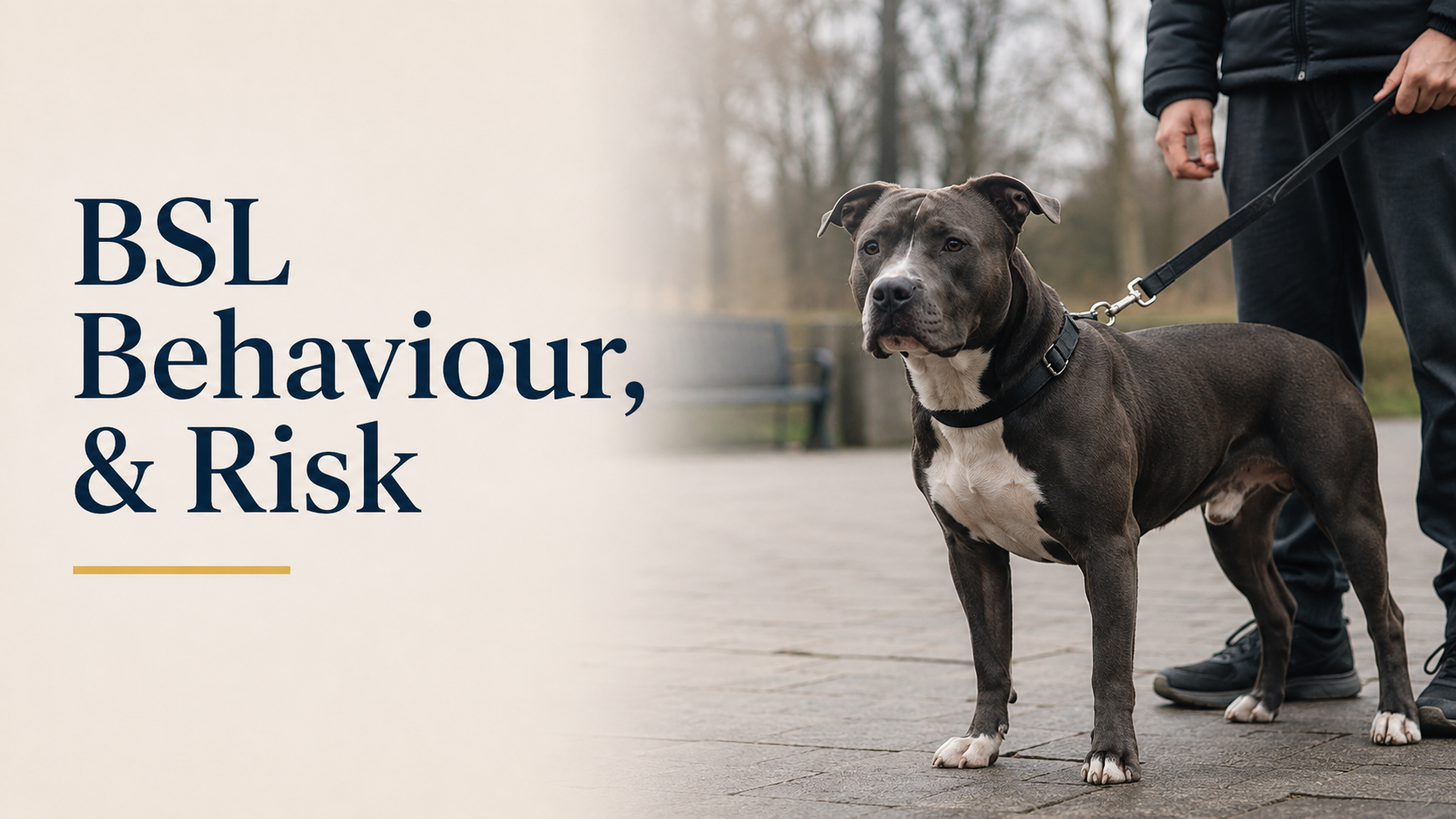
From 1 November 2026, Scotland will make it an offence to leave a child under 12 alone with a prohibited dog in a home or other private setting, gardens included. An adult aged 16 or over must be present whenever the child is with the dog. The new rule sits within the existing Certificate of Exemption framework, meaning it applies to owners already legally permitted to keep a banned type, not just those keeping one illegally.
For anyone working professionally with XL Bullies and other prohibited types, this is important. Household risk assessments, which I’m going to write about soon, muzzle training, child-dog management plans and client documentation all sit downstream of it. It is worth understanding properly, not because trainers and behaviourists are expected to give legal advice, but because clients will ask, and we need to be able to signpost them accurately rather than wing it.
Here is the practical shape of it. The rule applies to prohibited types under the Dangerous Dogs Act 1991, currently the Pit Bull Terrier, Japanese Tosa, Dogo Argentino, Fila Brasileiro and XL Bully. It applies in private settings, which is the significant shift, since existing lead and muzzle requirements already cover public places. It applies to children under 12, and the supervising person must be at least 16, so the responsibility does not disappear just because the dog and child are at home.
If you don’t follow the exemption conditions to the letter, it can result in the Certificate of Exemption being invalidated, the dog being seized and possibly PTS. An owner may also face a fine of up to £5,000, up to six months in prison, or both. The existing conditions around neutering, microchipping, secure containment, public muzzling and the requirement that the lead is held by someone over 16 remain in force alongside the new rule. One recent change is that third-party public liability insurance is no longer required as a condition of exemption in Scotland.
The obvious controversy here is one you will already be familiar with. Breed-specific law does not replace behaviour-led risk assessment. A dog’s size, weight, strength and physical capability genuinely change how much damage may result if a bite occurs, and responsible risk assessment cannot ignore that. What breed category does not reliably tell us, on its own, is whether the individual dog in front of us is likely to bite in the first place.
A supervision rule tied to a legal category therefore tells us something about potential worst-case severity, but far less about the actual behavioural likelihood presented by a particular dog. It also does nothing to address incidents involving dogs outside the prohibited categories. I have not found a dataset that tells us exactly what proportion of child-dog incidents involve non-prohibited breeds, so I am not going to pretend that figure exists. However, prohibited dogs make up only a tiny proportion of the total dog population, which makes it highly likely that many, and probably most, child-dog incidents involve breeds nobody has ever proposed banning.
That tension is not new, and it is not going away with this update. The rule exists, clients are going to ask about it, and our job is to help them meet it properly while continuing to do the work that actually keeps children safe: management, muzzle conditioning, environmental structure and honest behavioural assessment of the individual dog in front of us. I know I’ve said it already, but I think we need an overhaul of how this is done.
A comment worth pausing on
I want to bring in something that happened on one of my own social media posts recently, because it is a useful case study in exactly the kind of confusion this legislation sits inside.
I had posted about a story involving a celebrity reportedly attacked by an XL Bully, using a photograph circulating with the story as a body-language example. To be fair to the image, it probably was not taken in the moments directly before the reported attack. However, it still showed genuinely useful warning signs worth pointing out: tension, stillness and a look that any experienced eye would clock. That was the actual point of the post. Read the dog, not the headline, and use what is visible to teach recognition, even when the exact timeline is uncertain.
One commenter did not engage with any of that. Instead, she spent a fair amount of time confidently insisting that XL Bullies have what she called an “uninhibited bite”, and that this was simply an established fact about the breed. She was not interested in discussing body language. She wanted the conversation to be about the breed itself, delivered with a level of certainty that assumed the science was settled.
That phrase is actually what sent me off to check properly. It is not one I hear often, and it is not a term I recognised from the literature I am familiar with. That is exactly why I wanted to see whether I had simply missed something rather than immediately assume she had made it up.
So I went looking.
The words “uninhibited bite” have appeared descriptively in some older writing about canine and canid behaviour, usually to distinguish a damaging bite from the restrained biting seen during normal social interaction. What I could not find was the phrase being used as a recognised breed-level scientific classification, or as an established characteristic of XL Bullies, Pit Bull-type dogs or any other domestic breed. It certainly is not evidence of a special bite mechanism unique to XL Bullies.
Bite inhibition is a real concept, although it is often used more neatly in puppy training than it is defined across the scientific literature. In that context, it usually refers to a dog learning to moderate the pressure of its mouth during play and other social interactions. Puppies bite one another, feedback follows when they bite too hard, and over time many learn to use their mouths with greater restraint.
What we do not have is strong experimental evidence showing that softness learnt during puppy play reliably transfers into every other behavioural state. A dog using its mouth gently during normal social interaction does not guarantee that it will regulate bite force in the same way when frightened, in pain, highly aroused or involved in serious conflict. Inhibitory control in dogs is highly context-dependent, so performance in one situation cannot simply be treated as proof of control in another.
It is also important not to fall into the opposite oversimplification and claim that dogs only ever bite defensively after being pushed too far. Some aggressive behaviour can be proactive or instrumental, driven by what the dog has learnt the behaviour achieves rather than by an immediate need to escape. Predatory behaviour should be considered separately again because its motivation and emotional processes are not necessarily the same as those involved in social aggression.
The careful conclusion is narrower than either extreme. A dog that mouths gently as a puppy or accepts handling calmly as an adult is not guaranteed to show the same restraint during fear, pain, high arousal, serious social conflict or predatory behaviour. Equally, none of that provides evidence that XL Bullies possess a scientifically established “uninhibited bite”. Conflating early bite inhibition with reliable behaviour under pressure, or assuming every serious bite must be defensive at root, are both claims the evidence does not support.
The literature also studies aggression severity and attack style, including whether a bite punctures, shakes or is sustained, alongside impulsivity and self-control, which can affect how quickly an individual dog escalates and how easily it disengages.
The strongest peer-reviewed injury literature repeatedly names German Shepherds and Pit Bull-type dogs among the breeds most often identified in severe bites to humans treated in US medical settings. That matters, but it needs interpreting properly. These are human injury reports, not controlled behavioural experiments on bite mechanics, and they cannot prove reduced bite control or a special attack style at breed level. They also tell us very little about aggression directed towards other dogs.
They also come with familiar limitations. We rarely know the true number of each breed in the wider population, breed identification is not always reliable, and reporting practices vary. There is also an obvious severity bias built into hospital data. A bite from a two-year-old Boerboel that gets over-aroused during play is far more likely to require medical treatment than a bite from a 15-year-old Chihuahua with three teeth and a personal grievance. Both dogs may have bitten, but only one is likely to appear in a serious-injury dataset. None of that makes the findings meaningless, but it limits what they can honestly be used to prove.
Behavioural research gives us a different kind of evidence, although this comes with its own selection problems. One study comparing dogs from breeds covered by dangerous-dog legislation with dogs from non-legislated breeds used validated owner-report measures rather than injury statistics. It found no significant difference between the two groups on the specific human-directed aggression factor tested, or on any of the other behavioural traits measured. Variation between individual dogs within the same breed was much greater than any clean difference between the two legal categories.
That finding is useful, but the sample should not be mistaken for a random cross-section of every dog within those breeds. Dogs from prohibited or tightly regulated categories that are still living in ordinary homes may already represent a filtered population. Dogs showing the most serious problems may have been seized, euthanised, excluded from rehoming or managed in ways that make them less likely to appear in voluntary owner research. The owners willing to participate may also be more experienced or conscientious than average.
The study also included very few dogs identified as Pit Bull type or Dogo Argentino, which were pooled into the wider legislated group. It therefore does not prove that prohibited breeds and non-prohibited breeds are behaviourally identical across the wider population. What it does show is that, among the dogs sampled, the legal label did not divide them into two clearly different behavioural groups.
A separate study looking at self-control in aggressive-reactive dogs found that poorer inhibitory control was closely associated with the individual dog’s aggressive reactivity towards a human provocateur. The researchers compared police and pet dogs while holding breed constant, so the study cannot tell us whether one breed has better or worse self-control than another.
What it does add is evidence that impulsivity, inhibitory control and aggressive reactivity vary meaningfully between individual dogs, including dogs of the same breed. That makes them more useful targets for assessment than assuming a legal or breed label tells us how quickly a particular dog will escalate or how easily it will disengage.
One more thing is worth flagging because it matters for how we talk about these stories professionally. Stories like this move fast. Breed identification gets stated with total confidence, second-hand details are repeated as fact, and by the time a story has passed through three or four outlets, it can be difficult to trace what was actually confirmed and what was assumed before being repeated until it sounded established. That does not mean every report is wrong, but it does mean we should be careful about treating repetition as verification.
When we, as professionals, repeat breed identifications or incident details we have not checked ourselves, or use confident-sounding terminology that turns out not to exist in the literature, we are doing the same thing breed-specific legislation does at a policy level: treating a label as more informative than the evidence in front of us.
If we want to hold policymakers to a higher evidentiary standard than “it looked like the breed everyone is worried about”, we need to hold our own commentary to the same standard. That includes being willing to say when something is unconfirmed, when a term is being used loosely, and when the more careful version of a story is less satisfying to repeat.
This isn’t theoretical for me
I want to be upfront about where I am coming from on this, because it is not an abstract policy position.
I have owned a Pit Bull Terrier. Rodney, exempted under the Dangerous Dogs Act, lived with me for years. I have also shared a home with a second exempted dog that was not mine, an ex-partner’s dog, so I know what day-to-day life with one of these animals looks like from both sides, as the registered owner and as the person living alongside someone else’s.
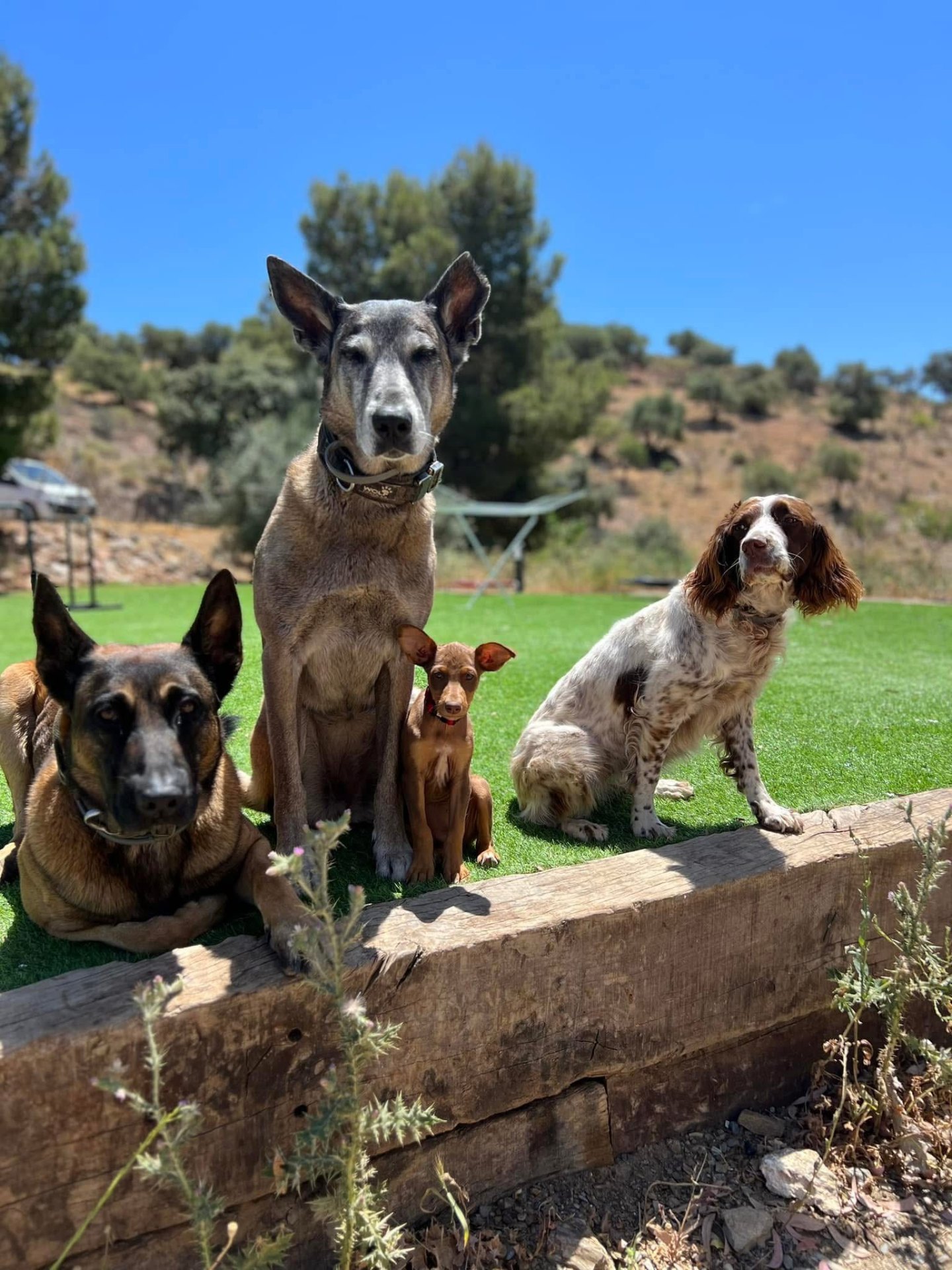
Beyond that, I have owned or lived with a genuinely wide spread of breeds across the temperament spectrum. A Cane Corso. A Doberman. A Staffordshire Bull Terrier. Currently, two Belgian Malinois and a Springer Spaniel. A wirehaired Dachshund at one point too, which, for anyone who has owned one, is its own lesson in how much personality and edge can exist in a small, non-controversial package.
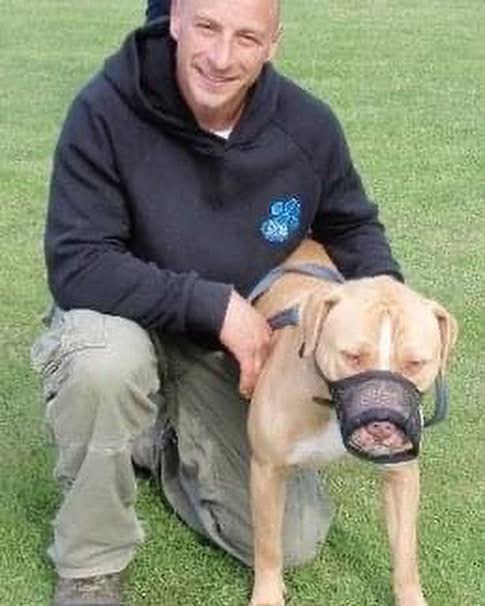
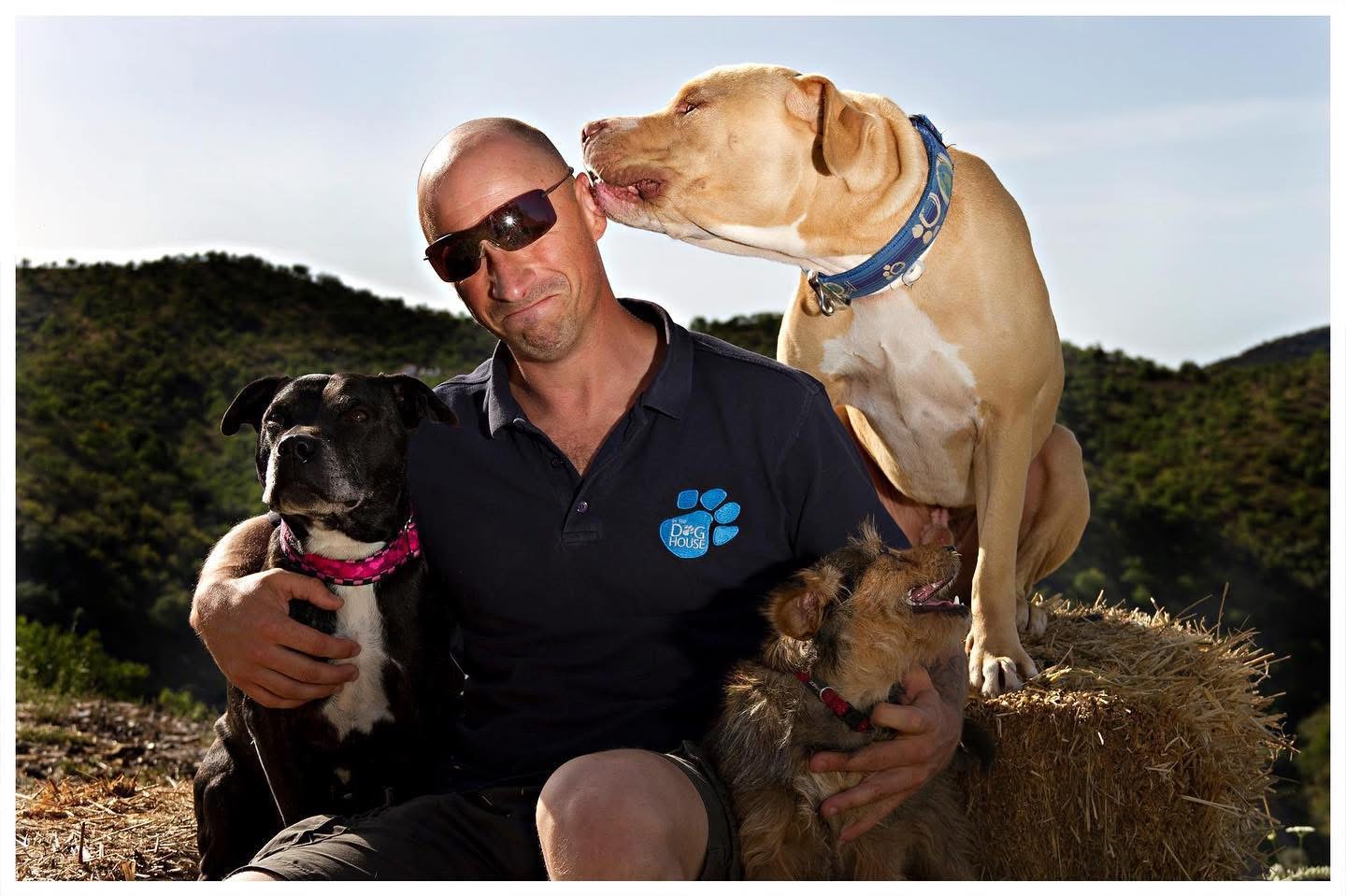
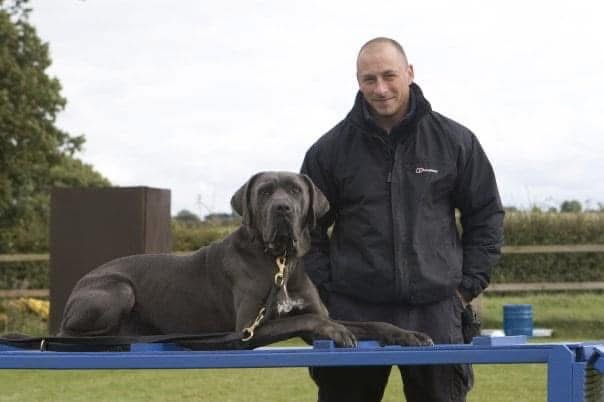
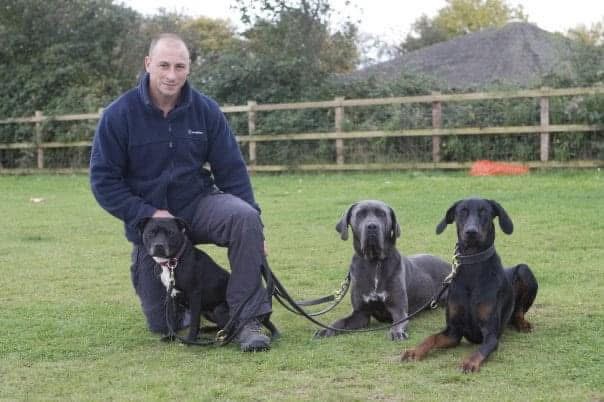
I also spent time as part of a London council-run training class specifically for owners of exempted and bully-type dogs. The field was full of Pit Bulls, Staffies and bully-type crosses, and what struck me most was not uniformity. It was range. Some of those dogs were as soft and biddable as any Labrador I have trained. Some were genuinely hard work and needed owners who understood exactly what they were managing. Same legal category. Same exemption paperwork. Wildly different animals.
I say all this because it is exactly the tension this piece is trying to hold. I have lived with dogs carrying the selection histories being discussed. I have also lived with the sheer scale of individual variation that makes any single breed-wide claim, in either direction, unreliable. Both are real. Neither cancels the other out.
A middle ground worth taking seriously
This brings me to something I think the industry does not discuss honestly enough, and it cuts against the neat “breed law bad, individual assessment good” framing I have just laid out.
There is a version of breed-specific policy that is not about instant seizure and destruction based on how a dog looks. It is about owner competency. Requiring people who want to keep certain breeds or types to demonstrate that they understand what they are taking on, and that they can handle, contain and train that dog appropriately. Graded and tested rather than assumed. Something closer to a licensing model than a ban.
I think that version deserves more serious consideration than it currently gets, and here is why.
We already accept, without much controversy, that certain breeds have been genetically selected for specific behavioural predispositions. Nobody seriously argues that a Border Collie’s intense eye, stalking posture and drive to control movement are purely products of individual upbringing rather than selection pressure applied over generations for exactly those traits. We build entire training systems around working with that predisposition rather than pretending it does not exist.
That comparison demonstrates the general principle that selective breeding can shape behavioural tendencies. It does not, by itself, prove that a particular aggression-related trait exists in another breed, so that claim still needs its own evidence.
However, if we accept that selection pressure matters in herding breeds, we cannot then insist that it becomes irrelevant whenever the historical purpose makes us uncomfortable. The Japanese Tosa is a good example because it was developed specifically for organised dog fighting. It is therefore reasonable to consider whether that selection history may influence tendencies around persistence, arousal and dog-directed conflict in some individuals.
That does not mean every Tosa will express those tendencies, nor does it mean the breed label tells us how a particular dog will behave. It means the historical selection pressure is a relevant part of the risk picture rather than something we should pretend never existed.
We also need to be more careful when moving from breeds such as the Japanese Tosa to modern legal categories such as the XL Bully. XL Bullies have mixed and contested breeding histories, with considerable variation between lines, and the legal definition is based heavily on physical characteristics rather than one clean, documented behavioural purpose. It would therefore be sloppy to talk about every XL Bully as though it had been deliberately selected for the same work in the same way.
The honest position is that breed history can influence behavioural tendency, while the strength and expression of that tendency can vary enormously between individuals, lines and environments. Selection pressure matters, but it does not turn a breed label into a behavioural diagnosis.
There is now some emerging neurobiological research in this area, although it needs to be interpreted far more carefully than the headlines will inevitably suggest.
A 2026 study by Üstündağ and colleagues used MRI and blood analysis to compare Pit Bulls classified as aggressive with non-aggressive Pit Bulls. The aggressive dogs in the sample had a smaller prefrontal cortex volume and a larger amygdala volume, alongside higher serum testosterone and dopamine levels. These brain regions form part of wider networks involved in behavioural regulation, emotional processing, salience and responses to threat, but neither region has one simple function that allows us to look at its size and read a dog’s behaviour from it.
A separate 2024 study also compared aggressive and non-aggressive Pit Bulls and reported lower plasma levels of serotonin and oxytocin, alongside higher dopamine, in the aggressive group. Feeding status affected several of the measurements, which gives some idea of how carefully this kind of blood result needs to be interpreted. Plasma measurements are also not the same thing as measuring neurotransmitter activity inside the brain.
What these studies show is that aggression in the individual Pit Bulls studied was associated with measurable differences in brain structure and blood chemistry. What they do not show is that Pit Bulls as a breed have smaller prefrontal cortexes, larger amygdalas or a particular chemical profile when compared with Labradors, Border Collies or any other breed. Neither study made that comparison.
They also do not tell us which direction the relationship runs. The biological differences may have contributed to the behaviour, but behaviour, stress, learning history, environment and repeated experience can also affect the brain and body. The findings may reflect several influences working together. A correlation between aggression and a biological measurement is not proof that one caused the other.
This distinction matters because it would be easy to take an interesting within-breed finding and turn it into a much bigger breed-wide claim. The research does not prove that historical selection created these particular brain differences, that the same pattern exists across breeds with a history of fighting or guarding, or that the measurements explain why an individual dog struggles with impulse control.
What it does provide is early evidence that researchers can investigate biological differences associated with aggression within a breed. That is worth taking seriously, but it is not the same as having identified a settled biological mechanism for aggression, and it certainly does not validate a vague claim that an entire breed has an “uninhibited bite”.
This does not contradict the point about individual variation. If anything, it reinforces it. The aggressive and non-aggressive dogs came from the same broad breed category, yet showed different behavioural and biological profiles. Researchers are beginning to identify possible neurobiological correlates of that variation, but we are a long way from being able to use a scan, hormone result or breed label to predict how a particular dog will behave.
Both things can therefore remain true at the same time. Artificial selection can influence behavioural predispositions across generations, while individual dogs within a breed can vary enormously in whether, when and how strongly those tendencies are expressed. The current neurobiology research is interesting because it begins to examine that individual variation, not because it turns a whole breed into one predictable type of dog.
What follows from that, in my view, is not “ban the breed”. It is that we should stop handing everyone the same dog with the same assumptions, while also refusing to assess behavioural risk using a phrase that does not exist as an established breed-level concept in the science.
A competency-based system would ask an owner to demonstrate that they understand the dog’s physical capability, likely behavioural predispositions and management needs, and that they can handle, contain and train that dog responsibly. That is very different from banning a dog because it matches a physical description, but it is also different from pretending that selection history tells us nothing useful.
The challenge is applying that idea without turning a broad predisposition into a prediction about an individual dog. Breed history can inform the questions we ask and the risks we prepare for, but it cannot tell us the answers before we have assessed the dog. The same breed may contain dogs that differ enormously in sociability, persistence, arousal, confidence, frustration tolerance and willingness to disengage.
That is exactly why competency matters. An owner does not need to believe that every dog of a particular breed is dangerous. They do need to understand what the dog may be physically and behaviourally capable of, recognise signs that the individual in front of them is struggling, and manage that risk before something goes wrong.
I will say plainly that this is a contested area, among behaviourists as much as among the public, and reasonable people land in different places on it. However, I do not think the industry does itself any favours by refusing to engage with the genetics point simply because breed-specific legislation, as currently practised, is clumsy and poorly evidenced.
The weakness of the current policy does not mean selection history is irrelevant. It also does not mean that loose terminology in either direction, banning dogs based primarily on appearance or asserting that a whole breed has an “uninhibited bite”, is an acceptable substitute for precise assessment.
We have a full video going further into genetics and behavioural predisposition if you want to explore that properly. It’s here.
What this means in practice for household risk work
None of the above means XL Bullies or other prohibited types carry no elevated risk profile worth planning around. Size, weight, strength, physical capability and selection history are all variables that may affect the likelihood or consequences of a bite. Risk assessment has to account for those factors alongside the individual dog’s behavioural history, environment, health, learning and current management. Good practice keeps all of them in view rather than collapsing them into a single confident label.
For any household with a prohibited type and children under 12, the new Scottish rule gives you a clean, legally grounded reason to formalise what should already be standard practice. A written supervision protocol should be specific to that household, covering exactly when the dog and child can be in the same space, what supervision means in practical terms in that home, and what separation looks like when full attention is not possible.
Further Scottish guidance is expected before the rule takes effect on 1 November 2026, so any professional protocol should be checked against the final legal wording once it is published. The behavioural plan can sit alongside the legal requirements, but it should not be presented as a trainer’s definitive interpretation of the law.
Muzzle training deserves to be built as a calm, positive process well before it is needed under pressure, not introduced reactively after an incident or a licensing requirement forces the issue. A dog that is comfortable and relaxed in a well-fitted muzzle is a genuinely useful risk-management tool. A dog that associates the muzzle with stress is not, and may become harder to manage precisely when you need the muzzle most. We have put together a full muzzle-training video that goes beyond the basics, including material for more experienced trainers working through harder cases. [Watch it here.]
Environmental management matters as much as anything trained. Baby gates, separate resting spaces and clear protocols for feeding time, doorways and high-arousal moments do more practical safety work day to day than most people expect.
Documentation is worth taking seriously, for the client’s protection as much as the dog’s. A written risk assessment, a supervision plan and records of training progress give an owner something concrete to show if questions ever arise, whether from family, professionals or, in the worst case, authorities. Those records support responsible practice, but they do not replace compliance with the exemption conditions or create a defence where the actual management has fallen short.
Where clients need actual legal clarity on Certificate of Exemption status, compliance requirements or how this new rule interacts with their specific circumstances, that is a query for a suitably qualified Scottish solicitor, Police Scotland, gov.scot or mygov.scot, not a trainer’s call to make. Clients in England and Wales should be directed to the relevant GOV.UK guidance. Know the boundary and be comfortable naming it. Your value is in the behavioural and management side. Stay in your lane on the legal advice.
The bottom line
Legislation built around breed labels will keep generating headlines, comment-section certainty and rules that do not map cleanly onto actual risk. That is not going to change soon, and this update will not be the last one.
What we can control is whether our own assessments stay grounded in what the evidence actually shows, rather than in whatever confident-sounding phrase happens to be circulating that week. We also need to be honest enough to hold two things at once: breed-specific legislation as currently practised is poor policy, and breed history can still tell us something relevant about the dog in front of us.
Read the dog. Check the claim before you repeat it. Help your clients meet the letter of the law while continuing to do the work that actually keeps children safe.