5 things I WISH more people knew before becoming a dog trainer…
By Dean Nicholas
Dog training can be an amazing industry, but there are a few things people often underestimate before they step into the work. Here are my top 5!!!!
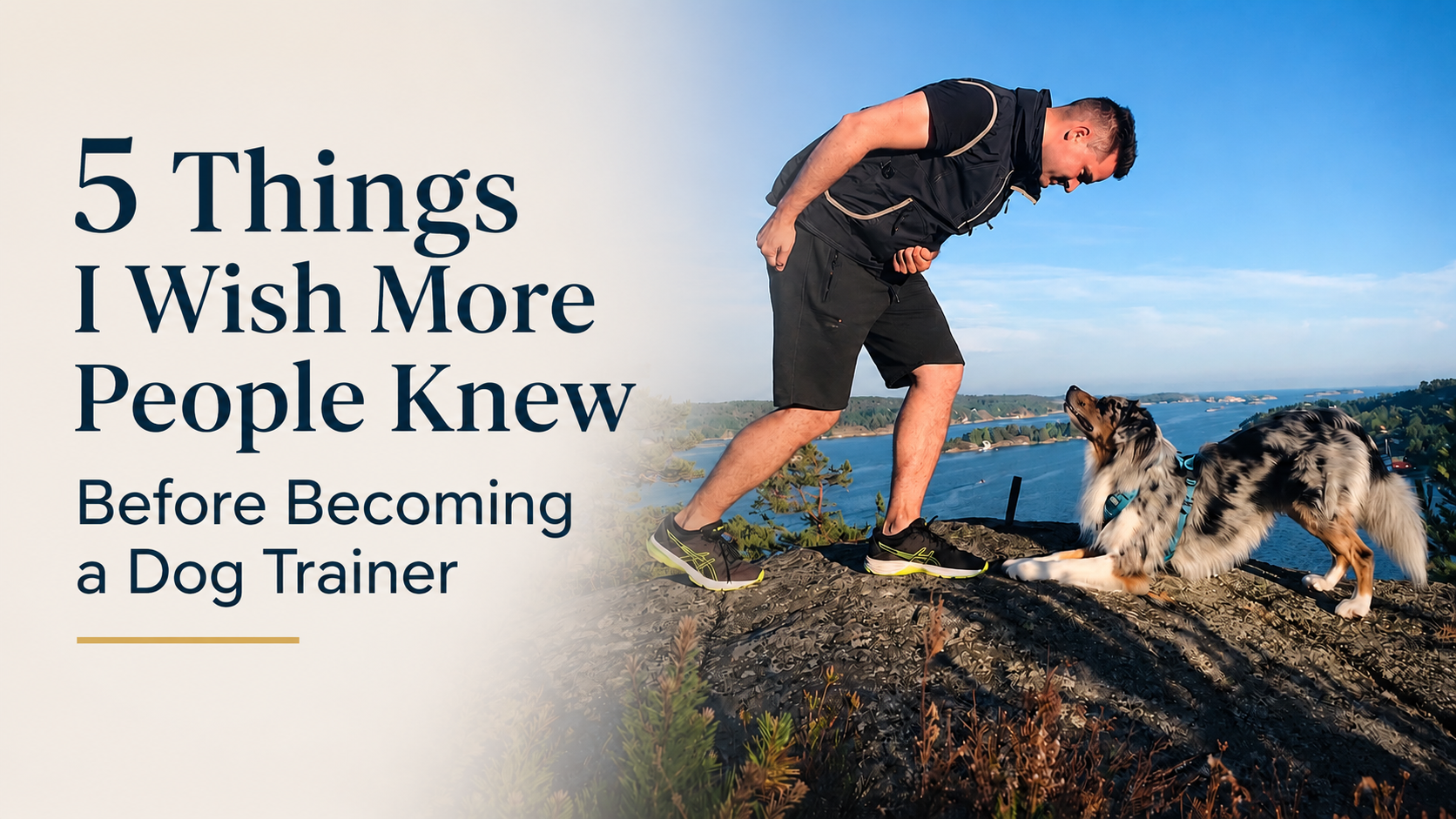
Dog training can an amazing industry to work in, and I can see why it entices people in.
You get to help dogs, you connect with animals, you can effectively train and are able to build & modify behaviours with your own dog and friends dogs…
But… there are a few things I think people often underestimate before they step into this work.
Here are my top 5!!!!
1 . You need FAR more people skills than you realise. Especially if you want to work with behaviour cases.
Unlike the mechanic who fixes the car for you, in most cases we are fixing or teaching the person to fix the problem with a few hands on bits along the way.
You need to be supporting the human at the other end of the lead, and that human might be overwhelmed, embarrassed, frustrated, scared, defensive, exhausted, or close to giving up.
Your ability to listen, explain, reassure, challenge kindly, and communicate clearly matters just as much as your ability to train the dog. If you don't enjoy human communication, this WILL be a challenge in this industry.
2. Managing client expectations is a skill in itself.
Clients often want change quickly, and honestly, I understand why they think that way.
You have to remember if they understood how behaviour and change happens then they likely wouldn't need you.
They are living with barking, lunging, separation issues, fear, aggression, stress, pinching food, restless dogs, lead pulling, a dog that wont come back or chaos every single day.
We know behaviour change takes time, their expectation is more immediate change.
The tricky part is learning how to keep clients hopeful without over-promising.
You need to be honest about timelines, realistic about progress, and still help people feel like the work is worth doing and that change and progress IS happening.
3. Protecting your personal time can be hard.
When you first start, it is VERY easy to build your diary around everyone else.
Evenings because clients work. Weekends because clients are free. Messages at 10pm because someone is worried. Admin squeezed into the gaps.
Which at the start, maybe is a necessity… beggars cant be choosers…
But, before you know it, your own time has a habit of vanishing.
Being helpful does not mean being available all the time.Learning to protect your diary, your energy, and your boundaries is not selfish. It is what keeps you in the industry long-term.
4. Client compliance is so important, and not as easy as you might think to get…
You would be amazed how many people will pay for help, nod through the session, understand the plan… and then do very little between appointments.
Is this a communication or understanding issue? Maybe…
Is this a time constraint or a practical skills issue? Quite possibly…
I'll tell you what its not though, its not a lack of care… That's why you're there.
It often means they are overwhelmed, unclear, busy, inconsistent, or struggling to turn the theory into daily habits.
A big part of YOUR JOB is not just giving people exercises. Its to figure out the obstacles.
True story, when I get to the bottom or WHY one of my clients wasn't training, it transpired that cutting up the treats was a grind and they never prepared them in advance… so… me brining enough cut up sausages in a tub for the fridge for a training each morning between sessions led to a dramatic change in the progress of the dog.
Our job is to help them to help their dog. That means building engagement, simplifying plans, checking understanding, creating accountability, and making the work feel achievable.
5. YOU need emotional resilience and frustration tolerance.
Things will not always go to plan, I'd argue they rarely do with so many moving parts.
Dogs will have bad days. Clients will forget the homework. Progress will stall. Cases will be messy. People will sometimes (often!) ignore your advice and then (sometimes) blame the process.
You need to be able to stay steady and have self believe in your knowledge and competence. Not arrogance (there's enough of that in some parts of our industry), but a calm head that you are on the right path.
Steady enough to problem solve, adapt, and keep going without taking every client or dog setback personally (which is harder than you think when you care).
Dog training isnt just dogs... It is about knowing & understanding people, managing expectations, protecting your own energy, creating behaviour change in real life, and staying resilient when the work gets hard.
And I think the trainers who understand that EARLY are the ones most likely to build long standing careers that are not just successful… …but sustainable.