Why Hand Feeding Belongs at the Foundation of Your Training Cases
By Nando Brown
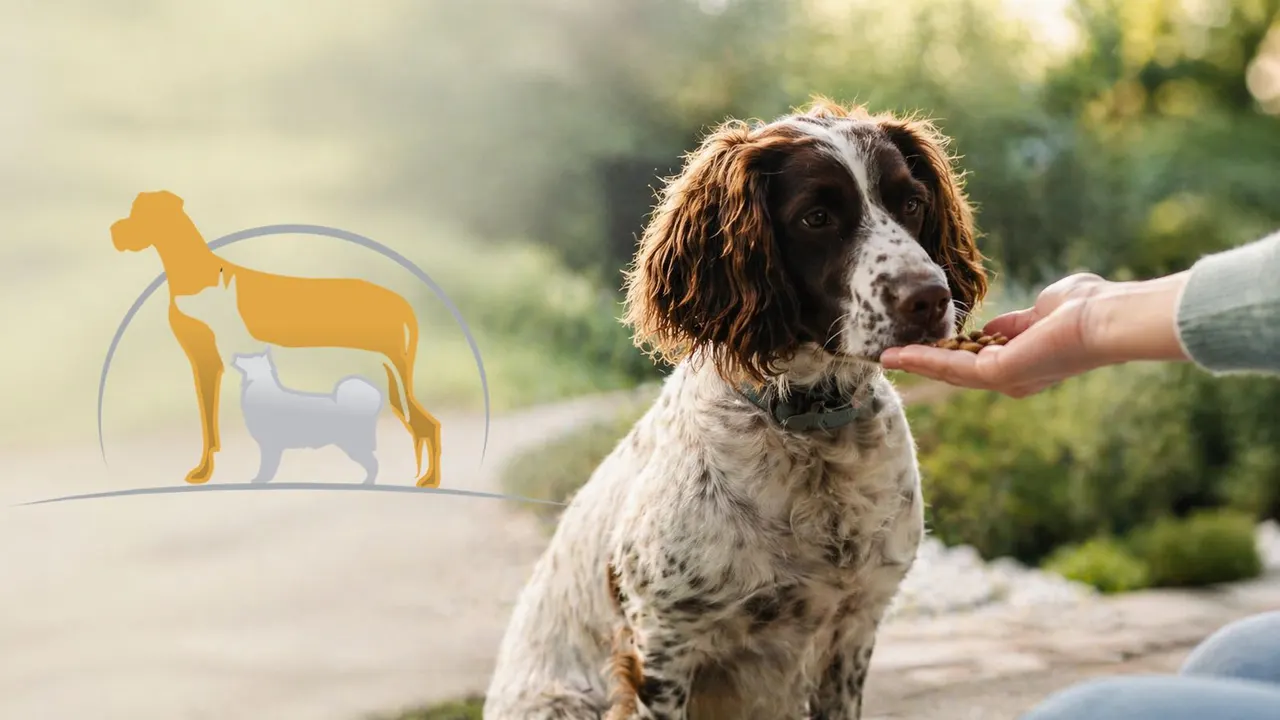
Hand feeding isn't a gimmick — it's a foundational tool that shapes engagement, relationship, and learning from day one.
Listen to this article · read by Nando Brown
Hand feeding is one of those things most trainers know about, many recommend occasionally, and very few use in a properly structured way.
At the School of Canine Science, it tends to sit right at the start of a lot of cases. Not because it's fashionable or clever, but because it reliably changes how dogs and people relate to each other before any real training begins.
We use it with reactive dogs, fearful dogs, dogs that struggle to engage, dogs that are overly aroused, dogs that feel disconnected from their handlers, and dogs that technically know the behaviours but cannot access them in real environments. We also use it with owners who struggle to stay present or consistent.
The mechanism is simple. Food stops being something that happens separately from the handler and becomes something that happens through them. Repeatedly. Predictably. Without pressure.
That matters more than most people realise.
A lot of dogs don't struggle because they don't understand what's being asked. They struggle because the handler has very little relevance once the environment gets interesting or difficult. Hand feeding starts to change that picture quickly.
This is not about making dogs hungry
This is not about withholding food or making dogs hungry. Dogs will work for food even when they are not deprived. They will choose to engage for food rather than take it freely. Hunger is not what makes this work. The relationship does.
People often ask what food to use. The honest answer is that it rarely matters. Kibble, raw, wet food, fresh food, or a mixture all work. What matters is that the owner can manage it easily and actually follow through for however long you've asked them to.
If adding fresh food improves variety and gut health, great. If not, it doesn't stop the protocol working. Behaviour does not exist separately from physiology, but this is not a diet intervention. It is a delivery intervention.
Where the structure comes in
Where hand feeding becomes genuinely useful, rather than just novel, is in the structure.
Stage 1: Non-contingent feeding
The dog does nothing to earn the food. No eye contact required. No calm behaviour expected. No "good choices" being reinforced. Food simply comes from the handler's hand regardless of what the dog is doing.
This stage makes some trainers uncomfortable, particularly those worried about reinforcing unwanted behaviour. That concern assumes this stage is about training behaviour. It isn't. It's about predictability and emotional safety. Food happening reliably in the presence of the handler, and in the presence of the environment, starts to change how both are experienced.
Some dogs move through this stage quickly. Others need longer. There is no benefit to rushing it. A useful marker: when the dog begins orienting to the handler in a relaxed, anticipatory way rather than ignoring them or avoiding them, you're probably ready to move on.
Stage 2: Contingency around engagement only
The handler waits. When the dog chooses to orient towards them, food arrives. No calling, no luring, no prompting. The dog is not asked to engage. They discover that engagement has an effect on the world.
This usually starts in low-distraction environments and gradually moves outwards. This stage tells you a lot about a dog. Dogs that struggle here are often dogs that have learned the handler is irrelevant once anything else is available. That's useful information.
Stage 3: Behaviour comes back in
The dog engages, the handler asks for something simple, and food follows. Loose lead walking, positions, recalls, transitions. Things that actually matter in real life.
These stages are not linear
You don't graduate and stay there. You move between them depending on the dog, the environment, and the day. Some days you ask for nothing. Some days you shape engagement. Some days you train. That flexibility is a big part of why this works across such a wide range of dogs and situations.
The variables you're adjusting are environment, proximity, and emotional difficulty. When one goes up, the others come down. You only ever change one at a time.
This is particularly useful around triggers. Non-contingent feeding near things that previously predicted stress is rarely problematic. You are not waiting for calm. You are simply allowing food to occur in the presence of something the dog used to find difficult. Once they're coping, you can layer in engagement or behaviour, below threshold, at your own pace.
Over time, orientation changes. Dogs start checking back in because experience has taught them where good things reliably happen.
Why we still use it
From a practical standpoint, hand feeding solves a lot of problems at once. It improves owner compliance. It forces presence. It gives clients something concrete that works early. It creates momentum.
That's why it sits at the foundation of so much of what we do.
It isn't exciting. It isn't clever. It's definitely not sexy. It just works.
Protocols like this sit within a much bigger framework of behaviour science and case application. If you want to understand not just what to do but why it works, the Behaviour Bible is where we go deep.